
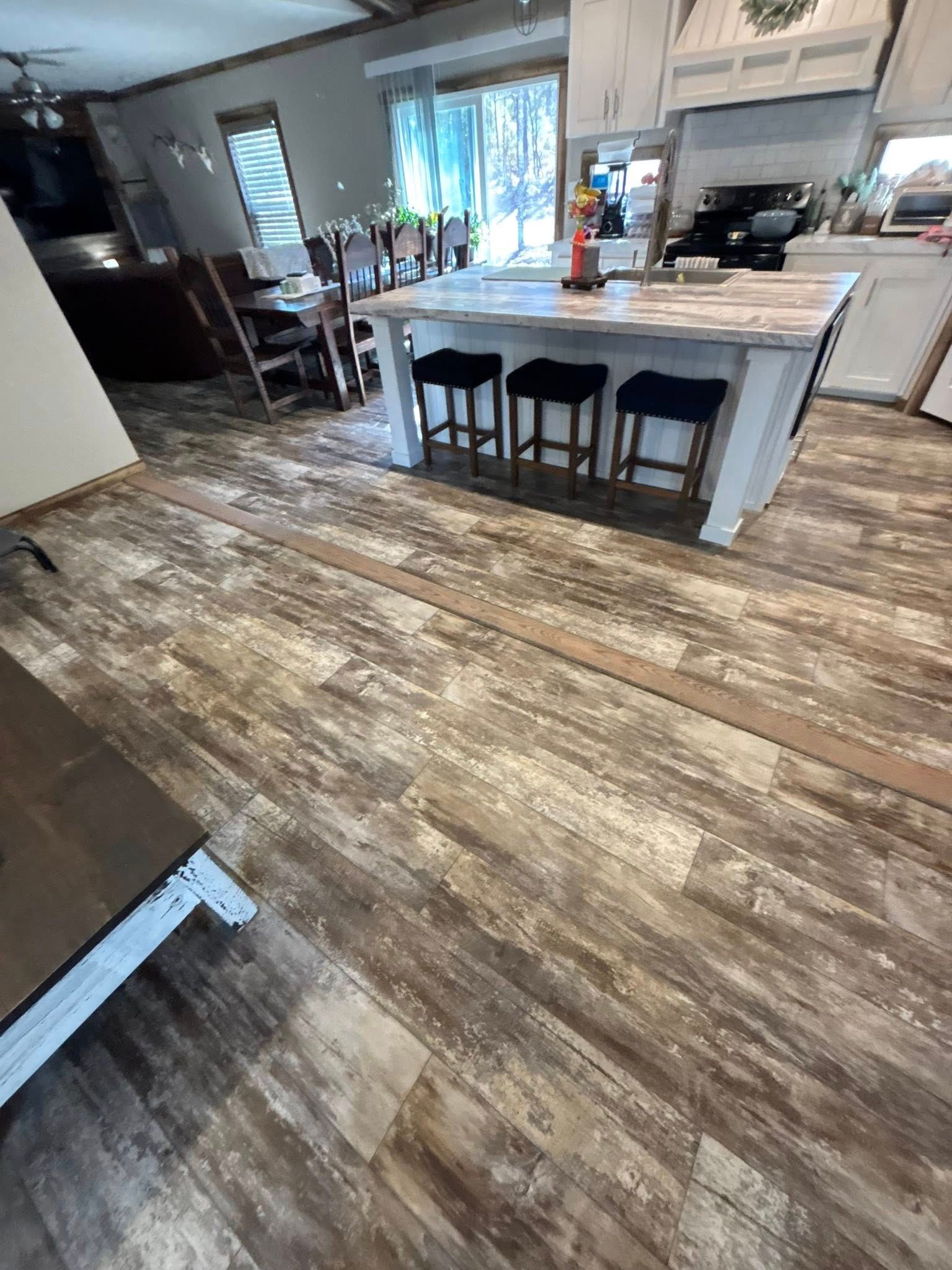
Floors Built for Daily Life and Long-Term Value
Hardwood in Willis for homes with worn surfaces and outdated finishes that lower property appeal
Scratched surfaces and fading finishes signal that your hardwood has reached the end of its useful life, creating a visual disconnect between your home's potential and its current condition. Willis Flooring Pros installs solid and engineered hardwood throughout Willis using nail-down, glue-down, and floating methods selected based on subfloor conditions and species characteristics. You'll choose from oak, maple, hickory, and walnut with custom stains that range from natural tones to deep espresso finishes, ensuring the floor complements existing trim and cabinetry.
Installation begins with subfloor assessment to identify moisture issues or unevenness that would compromise plank stability, followed by acclimation of wood materials to local humidity levels before fastening begins. Each method—whether face-nailing through the tongue for solid planks or click-lock systems for engineered products—addresses specific structural requirements and traffic patterns. You're working with a contractor who evaluates joist spacing, HVAC placement, and expansion gaps before the first board goes down.
Schedule a property evaluation to identify subfloor preparation needs and discuss species selection based on your household traffic patterns.
Why Certain Woods Perform Better in Texas Humidity
Solid hardwood expands and contracts with seasonal humidity changes, which makes engineered products—constructed with cross-laminated layers—more stable in climates where indoor conditions fluctuate between air-conditioned summers and heated winters. You'll notice this stability in how seams remain tight and planks resist cupping, especially in rooms without consistent climate control. The top wear layer on engineered flooring provides the same refinishing capacity as solid wood, though with fewer cycles depending on veneer thickness.
Once installation is complete, you'll see consistent gaps at walls and transitions that allow the floor to move without buckling, along with smooth transitions between rooms that account for height differences. Willis Flooring Pros uses moisture barriers under installations in areas prone to ground-level dampness, preventing the adhesive failures and plank warping that occur when vapor migrates upward through concrete slabs.
Finish options range from site-applied polyurethane, which builds thickness through multiple coats, to factory-finished UV-cured layers that provide immediate use and eliminate on-site odor. Each approach affects sheen level, scratch visibility, and maintenance requirements, with matte finishes hiding wear better than high-gloss surfaces in active households.
What Homeowners in Willis Ask Before Hardwood Installation
Flooring projects involve choosing between materials with different performance characteristics, and understanding those differences helps you avoid mismatches between expectations and outcomes.
What determines whether solid or engineered hardwood works better for a specific room?
Solid hardwood performs well above grade in climate-controlled spaces, while engineered options suit basements, kitchens, and areas with variable humidity due to their dimensional stability and resistance to moisture-induced movement.
How does the nail-down method differ from floating installations?
Nail-down systems fasten planks directly to wood subfloors using cleats driven through tongues, creating a permanent attachment, whereas floating floors use interlocking edges and underlayment without fasteners, allowing easier removal and better performance over concrete.
Why do expansion gaps matter around the perimeter of hardwood installations?
Wood expands with humidity increases and contracts in dry conditions, and perimeter gaps—typically concealed by baseboards—prevent buckling by allowing movement without resistance from fixed walls or cabinetry.
What subfloor conditions prevent hardwood installation in Willis until corrective work is completed?
Moisture readings above 12 percent, unevenness exceeding 3/16 inch over ten feet, or structural deflection from inadequate joist spacing require remediation before planks are installed to prevent bonding failures and surface irregularities.
How do custom stain applications change the appearance of standard wood species?
Staining alters the color while allowing grain patterns to remain visible, letting homeowners achieve specific tones—such as gray-washed oak or walnut with red undertones—that coordinate with cabinetry and trim without changing species.
Willis Flooring Pros handles hardwood installations with attention to subfloor preparation and climate considerations that affect long-term performance in Texas homes. Request a detailed estimate based on your current floor condition and preferred wood species to move forward with flooring that adds measurable value.